


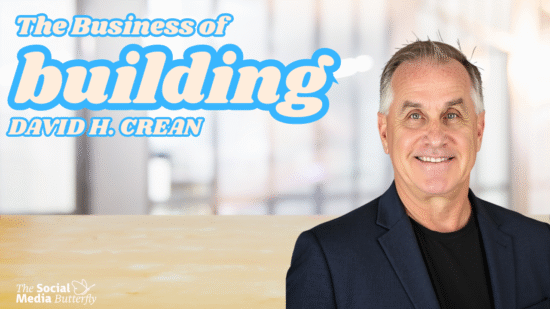
For this edition of the Business of Building, I spoke with David H. Crean, Ph.D., founder and managing partner of Cardiff Advisory, whose career has taken him from the research lab to some of the most important conversations happening around life sciences companies, capital and growth.
David started his career as a scientist, earning a master’s in oncology and a Ph.D. in biophysics before moving into the biopharmaceutical industry and eventually into corporate and business development, M&A, investment banking and venture capital. Today, he advises life sciences and healthcare companies on M&A, partnering, capital raising and valuation, works with several venture funds and serves as fractional chief business officer of MediciNova.
What makes David’s story especially interesting is how deliberately he has built each chapter on the one before it. He understands the science, but he also understands the business and capital behind it. That combination has become central to his work, his CEO360 leadership program and his upcoming book, Dual Fluency.
We talked about the career decisions that took him from the bench to the deal table, what he has learned about building companies and leaders, why relationships have played such an important role throughout his career and the advice he would give to someone building their own career today.
Tell us about yourself and your career journey.
I started at the bench. Premedical degree, then a master’s in oncology, then a PhD in biophysics, followed by a two-year postdoctoral oncology fellowship split between Roswell Park Cancer Institute and the Ontario Cancer Institute in Toronto. For the first chapter of my career, I was a scientist, full stop.
Then industry came calling. I was recruited out of academia into a small emerging biopharmaceutical company as a director of research, still on the science side but now with commercial stakes attached. The real turn came when Allergan recruited me and I moved into corporate and business development: mergers, acquisitions, and partnering. I spent twelve years there learning how deals actually get done. Along the way I went back to school and earned an MBA in finance while working full time, because I’d decided that if I was going to sit at that table, I wasn’t going to rent my understanding of the numbers. I was going to own it.
After Allergan, I was recruited into a small U.S.-based biopharmaceutical company backed by private equity. We built it, and the business was successfully acquired. That exit was my bridge out of operating roles and into investment banking and venture capital, where I’ve been ever since.
Today I’m founder and managing partner of Cardiff Advisory, I’m involved with several venture funds, and I serve as fractional chief business officer of MediciNova, a publicly traded biotechnology company. Different seats, same table: helping life sciences companies turn science into value.
Was there a defining moment that changed the direction of your career?
Not one. Three.
The first came in the early ’90s. I was trained for the research laboratory, but I knew I wasn’t going to spend my career there. Early-stage discovery is essential work, and I respected it. My head just kept drifting to the other side of the building: how companies actually grow, and how business development builds inorganically what a lab can only build slowly. Once I admitted that to myself, the move to the commercial side was inevitable.
The second was discovering capital as its own discipline. I got interested in private equity and venture capital as the machinery that funds biopharmaceutical and healthcare companies, and I realized that if you don’t understand how the money thinks, you’re only seeing half the business.
The third was choosing investment banking, advising both privately held and publicly held companies on mergers and acquisitions, partnering, and capital financing. That’s where the first two moments converged: the science I was trained in, the commercial instincts I’d built, and the capital fluency I’d gone out and acquired, all applied to helping companies get deals done.
Three decisions, one direction. Each one moved me a step closer to the capital side of the science, and that’s exactly where Cardiff Advisory sits today.
What do you do, and who do you help?
I run Cardiff Advisory, where I advise life sciences and healthcare companies on M&A, partnering, capital raising, and valuation. Most of my clients are founders and CEOs of early-stage companies in biopharma, medtech, and diagnostics. They’re scientifically brilliant and commercially under-armed. They can explain their mechanism of action in their sleep. Ask them how an acquirer will value the asset, or what a term sheet actually costs them, and the room goes quiet.
That gap is my business. I’ve spent three decades closing transactions and venture investments across the sector, and everything I do now rests on one premise: the founders who win speak two languages, science and capital. The advisory work is one channel. Cardiff Insights, my weekly publication on M&A, capital markets, and leadership, is another. My book, Dual Fluency, which launches at the end of this year, makes the argument in long form. And CEO360, the leadership development program I co-founded and built for life sciences founders and CEOs, teaches it in a room, peer to peer. Different formats. Same fight.
What do you enjoy most about your work?
The moment the switch flips. A founder comes in guarding their answers, treating every hard question as an attack. Somewhere in the work, they start hunting for the hard questions themselves. “Get your answers questioned” I love to say. When a CEO starts living that instead of just hearing it, the company gets better fast, and I get a front-row seat.
What are you working on right now that excites you?
CEO360 gets a good portion of my energy outside of Cardiff Advisory. It started as a giveback to the ecosystem, plain and simple. It’s become something bigger: we’ve now mentored more than 170 CEOs in the life sciences sector, and the business keeps growing, including more and more interest from other geographies in the United States and internationally. The premise of the program is that leadership for a life sciences CEO is a learnable discipline, best learned peer to peer. A hundred seventy CEOs in, the premise holds.
I’m also soft circling a second book but need to wait to see the traction and results of the first book, Dual Fluency. One theme keep asserting itself: “Investability,” about what actually makes an early-stage company fundable, as opposed to what founders think does. And Cardiff Insights keeps its weekly cadence through all of it, because the writing is where the ideas get pressure-tested first.
Leadership & Growth
What accomplishment are you most proud of?
A few, and they build on each other.
The first is finishing what I started academically: the PhD, and then the MBA on top of it while working full time in industry. Either degree on its own is common. The combination is rare, and it’s the engine of everything I do. One taught me to interrogate the science. The other taught me to interrogate the deal.
The second is the Allergan years, and one transaction in particular. Allergan made the decision to out-license its crown jewel: the Japan and China rights to Botox, to GSK, in exchange for cash upfront, milestones, and U.S. product rights to a GSK migraine drug. Think about that for a second. Putting your most valuable asset on the table, in two major markets, and structuring the trade so both sides win. It was a very complex deal, and it taught me more about deal architecture than any course ever could. You learn fastest when the crown jewel is the thing being negotiated.
The third is the banking work: helping early-stage biopharmaceutical companies get acquired by larger strategics, or complete pharmaceutical collaboration agreements that change their trajectory. When a founder has spent a decade building something and the deal that validates all of it finally closes, you never get tired of that phone call.
And the most recent is the book. Drafting and completing Dual Fluency, which launches at the end of this year. Deals close and the parties move on. A book stays on the shelf and keeps making the argument without me in the room. That’s a different kind of satisfaction.
What’s one challenge you’ve faced in your career, and what did it teach you?
The recurring challenge of my career has been this: every time I moved, I started over. From the lab to business development. From operating roles to banking. Each crossing meant I was suddenly the least experienced person in my new discipline, no matter what I’d accomplished in the last one.
What it taught me is that the answer is always people. Surround yourself with the brightest and best you can find, and be honest about what you don’t know. Sometimes that means who you hire. Just as often it means identifying several mentors who’ve already walked the road you’re starting down. I’ve had great mentors at every stage of my career, and I can draw a straight line from their guidance to every move that worked.
That’s also why I mentor now. The giveback that became CEO360 grew directly out of it. I’ve been on the receiving end of so much generosity that serving the same way for my mentees isn’t optional. It’s my way of giving back. Nobody builds a career alone, and the people who claim they did are misremembering.
What’s the best piece of career advice you’ve ever received?
It came from one of my mentors, Mark. He taught me to spend my energy on the issues I can actually control and stop spending it on the many things I can’t. He had a saying for it: “You cannot direct the wind, but you can adjust your sails.”
In this industry, that’s not a framed quote on a wall. It’s an operating principle. Markets close. Regulators move timelines. A buyer walks away the week you thought you’d sign. None of that is yours to control. What is yours: your preparation, your optionality, and your next move. I’ve repeated Mark’s line to more founders than I can count, usually at the exact moment they’re burning energy on the wind.
What advice would you give someone earlier in their career?
Learn the second language before you need it. If you’re a scientist, learn capital. If you’re a finance person, learn enough science to know what you’re buying. Most people wait until the stakes force them, and by then they’re negotiating their own future in a language they don’t speak.
And get your answers questioned. Don’t collect people who agree with you. Find the people who will push on your logic while it’s still cheap to be wrong.
Looking Ahead
What trends are you watching in your industry?
Three things have my attention.
First, capital has repriced what a fundable company looks like. There’s money in the sector, but it’s concentrating in fewer, larger rounds behind teams that show up de-risked. The middle of the pack isn’t getting cheaper terms. It’s getting nothing. That makes investability a discipline founders have to build deliberately, the same way they build a clinical plan. It’s the theme I keep returning to in Cardiff Insights, and probably the spine of the next book.
Second, M&A and partnering are carrying the exit load. With the IPO window opening only selectively, large pharma’s patent pressures make them motivated buyers, and cross-border licensing, including assets sourced from China, is resetting comps and timelines. Founders who design for partnership from the start will get paid for it. Founders who bolt a “strategic options” slide onto the end of the deck will not.
Third, AI in discovery and development. It’s real, and it compresses timelines. It also doesn’t rescue a weak business case. The companies using AI as a tool inside a disciplined strategy will separate quickly from the ones wearing it as a fundraising costume.
What opportunities or challenges do you see on the horizon?
The opportunity I keep coming back to is the sheer number of first-time CEOs running early-stage life sciences companies. The science has never been better, but the leadership infrastructure around it hasn’t kept pace, and there’s a tremendous need in this sector to give CEOs guidance and structure in how to become more investable in their business. Investability isn’t a pitch deck problem. It’s a leadership discipline, and almost nobody teaches it. That’s the gap CEO360 was built for, and the interest we’re now seeing from other geographies tells me the gap isn’t just American. It’s everywhere the science is.
The challenge is a bifurcated market: a small group of companies that can raise almost at will, and a long tail of good science trapped inside companies that can’t articulate value in the language buyers and investors use. Nobody is coming to translate for them. They either build dual fluency or they get orphaned. That’s not pessimism. It’s arithmetic.
Personal Branding & Networking
How has LinkedIn or building your personal brand impacted your career?
More than I would have predicted when I started. LinkedIn is where the platform got built: Cardiff Insights publishes every week, and writing it forces me to have a view. You can’t post “it depends” fifty times a year. That consistency, taking positions in public and being right often enough, is what builds recognition as a key opinion leader in the ecosystem. It’s not a title anyone hands you. It’s a track record people can scroll.
What I value most is that the platform runs both ways. It’s a channel for me, but it’s also become one for others: founders and CEOs reach out because they’ve been reading, they want to draw on comprehensive experience in the sector, and by the time we talk, they already know how I think. That’s the real function of a personal brand. Not visibility. Pre-earned trust.
How has networking influenced your professional growth?
It’s the foundation of everything. I’m highly connected within the industry, and I work at staying that way, but not by collecting contacts. The networking I care about is sitting with early-stage life sciences CEOs and founders and understanding their pain points: what’s actually keeping them up at night, whether they’re trying to drive the company forward in growth mode or preparing for an exit.
Those conversations do double duty. They’re where my best thinking comes from. The themes in Cardiff Insights, the curriculum in CEO360, and the arguments in the book all started as a founder telling me what hurt. And they’re where the work comes from, because every meaningful transaction I’ve been part of traces back to a relationship that started years before there was a deal to discuss. Deals are episodic. Relationships compound.
Getting to Know You
What’s something people might be surprised to learn about you?
Plan A was baseball. I was a shortstop, played at Ohio State, and had a short run in the minor leagues. The plan was to keep climbing. My knee had other ideas: a couple of injuries closed that door for good, and science got my full attention instead. It was my first hard lesson in a principle I wouldn’t learn to name until much later: you cannot direct the wind, but you can adjust your sails.
What do you enjoy doing outside of work?
Time with my family, ideally outdoors and preferably at the beach. We love traveling to other countries, and for me the culture is the point, not the landmarks. I’m also a committed foodie: I cook, I bake, and I take both more seriously than I probably should.
Is there a book, podcast or resource that’s influenced the way you think?
Two books have stayed with me. The first is Simon Sinek’s Start With Why. Every founder I meet can tell me what their molecule does and how it works. The ones who can tell me why the company exists are the ones who raise capital and recruit great people. Sinek gave me the language for something I’d watched play out in deal rooms for years.
The second is Jim Collins’ Good to Great, especially the discipline of getting the right people on the bus before you decide where to drive it. That idea shows up in how I advise, how I built CEO360, and how I answered your question about mentors. The people decision comes first. It always comes first.
Both of them, in different ways, fed the thinking that became Dual Fluency.
Is there anything else you’d like readers to know about you, your work or how they can connect with you?
If you lead an early-stage life sciences company and any of this landed, the easiest way is through Cardiff Advisory. Secondly, through Cardiff Insights, my weekly Substack. The weekly gives you a feel for how I think before we ever talk. You’ll find the advisory practice at cardiffadvisory.com, the CEO360 program at ceothreesixty.com, and the book at dual-fluency.com, with Dual Fluency launching at the end of this year. I’m on LinkedIn at linkedin.com/in/davidhcrean, and I answer my messages.
If you take one thing from this interview, take the question: who is pressure-testing your answers? If the answer is nobody, fix that first.
Connect with David on LinkedIn, follow David’s substack, learn more about Cardiff Advisory.